A template pack gives you the words. A virtual assistant writes and sends the messages for you. What each one costs, what each one can't do, and which to sort out first.
If you run a small plumbing business, you know the pattern.
The work is there. The phone rings. But the quote follow-ups, the overdue invoices and the review requests keep slipping, because you’re on the tools all day and flat out by night.
Two fixes usually come up.
Option A: Hire a virtual assistant. Pay them by the hour. They write and send the messages for you.
Option B: Buy a set of SMS templates for plumbers. The words are already written. You pick a text, fill in the gaps and send it from your phone.
They do different jobs, and they cost very different amounts. This article lays out both so you can pick the right one to start with.
Currency note. First published 13 May 2026 and rewritten 17 September 2026. The virtual assistant rates below are rough Australian market ranges and were not re-checked for this rewrite. Rates change, so confirm current pricing with any VA before you commit.
What a virtual assistant does well
A good VA is a person. That matters, because some parts of a plumbing business need someone who can think.
- Upset customers. “We’ve had a leak twice in three weeks and I’m not happy” needs a real reply from someone who can read the situation.
- One-off admin. Moving bookings off paper and into software. Cleaning up your accounts. Setting up your Google Business Profile properly.
- Answering the phone. A real person picking up a real call during business hours.
- The odd stuff. A council asking for paperwork on a job from 2019. A supplier dispute. Thirty PDFs that need reformatting.
- Sending for you. A VA can chase quotes and invoices without you touching your phone.
An Australian-based VA costs roughly $35 to $55 an hour. At 2 hours a week, that’s about $300 to $480 a month.
That’s a fair price for the right work.
What SMS templates do well
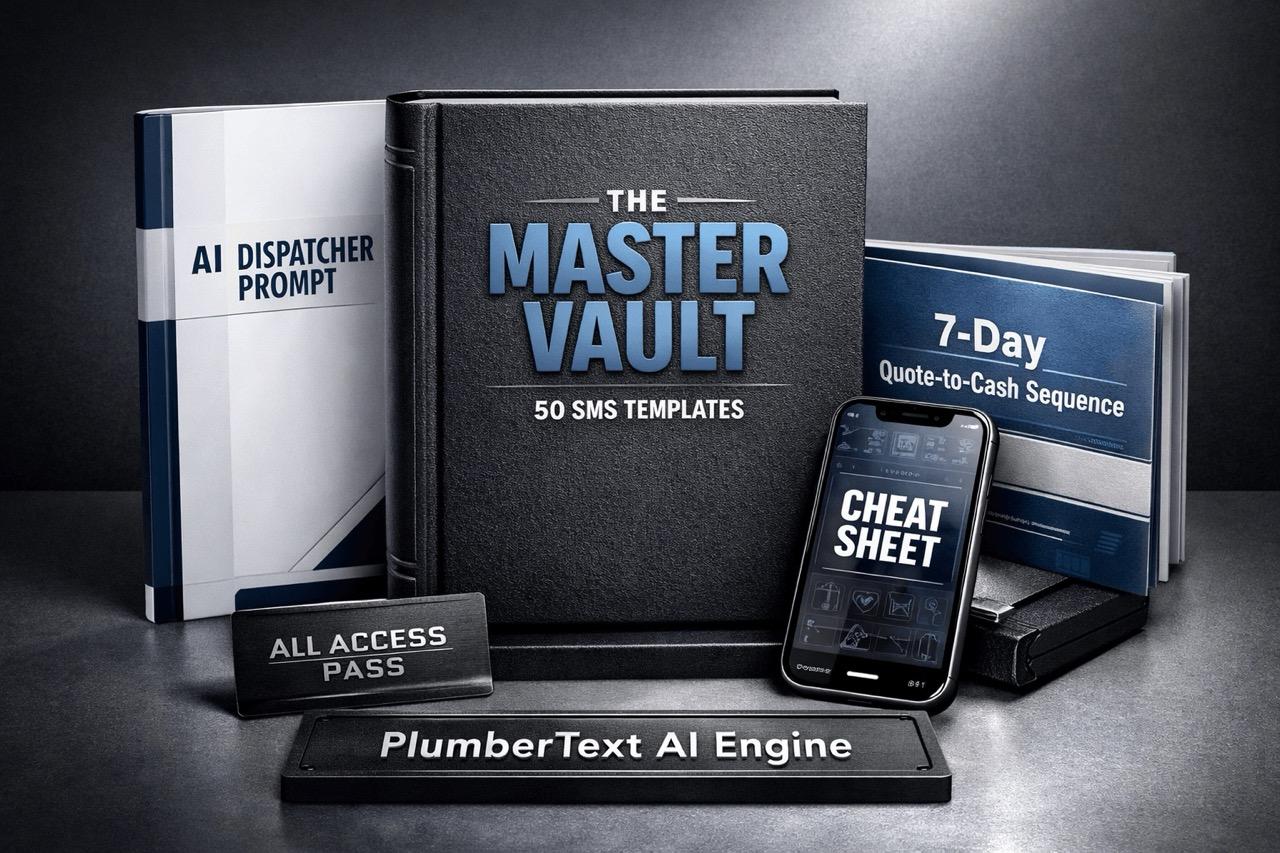
PlumberText is a pack of SMS templates for plumbers. It costs $27, once.
Inside the pack:
- 50 ready-to-send texts across 8 sections: leads, quotes, bookings, invoices, reviews, repeat customers, reminders and sorting new enquiries.
- An AI Dispatcher prompt. Paste it into ChatGPT and it drafts texts in your tone for the jobs the templates don’t cover.
- A 7-day follow-up plan that shows when to chase a quote and when to chase payment.
- A Mobile Cheat Sheet with your 10 most-used texts on one page.
- 3 review-request scripts.
The pack doesn’t send anything by itself. There’s no software and no setup, so you still hit send.
What it takes away is the writing. It also removes the pause of working out what to say, which is often what pushes a follow-up to tomorrow.
Side by side
| SMS template pack | Virtual assistant | |
|---|---|---|
| Cost | $27, once | Roughly $35 to $55 an hour |
| Who writes the text | Already written | The VA |
| Who sends it | You, from your phone | The VA |
| Upset or tricky customers | The AI Dispatcher drafts a starting point, you decide | A person handles it |
| Phone calls | No | Yes |
| If they leave | The texts stay yours | You find and train someone new |
Where each one fits
Templates suit messages that go out much the same way every time. Quote follow-ups, payment reminders, booking confirmations and review requests. The wording barely changes, so there’s little point paying by the hour to write it fresh each time.
A VA suits work that needs a person. Conversations, judgement calls, phone calls, and anything you’d rather not do at all, including the sending.
If you do hire a VA, hand them the templates too. Their hours then go on the work that needs them.
Which one to sort out first
- Start with the templates if you send your own texts. For $27 you get the wording for the messages you send every week. Use the Cheat Sheet on your next few quotes and check the texts sound like you.
- Turn on the reminders already in your software. Many job management and accounting apps can send booking and invoice reminders. Check your settings before you pay for anything else.
- Hire a VA when the pile needs a person. If calls, upset customers or the sending itself are eating your week, that’s VA work.
Where to start
Want the texts? Get PlumberText for $27.
Not sure whether you need templates, a VA or something bigger? Book a free 30-minute call. We’ll look at where your week is going and tell you straight which one to start with.
Disclaimer: This article is general information for Australian plumbing businesses and does not constitute financial, legal or business advice. Virtual assistant rates are rough market ranges and will vary. Information current as at September 2026.
Gregory Hardiman is the founder of GrokoryAI. Based in Australia. Focused on practical AI systems for trades and allied health businesses.